
I'm often asked to share reading lists, and I do read a lot, so I thought I'd start putting together a running list of some of my favourite books on business.
I'll update it as I go along, because there are so many books I've read over the years that have influenced how I think about business, money, marketing, and all of the strange things that come with deciding to work for yourself.
Some of these are practical, some are more philosophical, and some probably aren't that relevant to people running small businesses, but I still think they're interesting because they help you think about business in a different way.
For context, I've run my own business for years, and I've also been involved in growing SuperFeast from around $300,000 to over $6 million in annual revenue. So I've had the opportunity to experience business at a few different scales, and I've definitely learned a lot along the way.
Anyway, here are some of my favourites.
The E-Myth Revisited by Michael E. Gerber
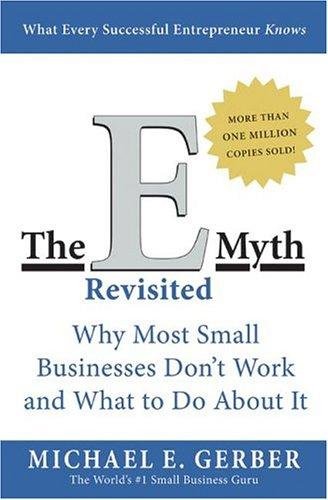
If you're thinking about getting into business, this is probably one of the first books I'd recommend.
It's very, very dry.
I personally struggled to read it, but the actual concepts are really important.
The main idea is that the person who is an employee, or someone who is very good at doing a particular thing, needs to have a very different mindset from the person who is running a business.
Just because you're an amazing yoga teacher, bodyworker, designer, or whatever it is that you do, doesn't necessarily mean you know how to run a business doing that thing.
They're two completely different skill sets.
Gerber talks about working in your business versus working on your business, and I think that's such an important distinction to understand, particularly when you're starting out.
It's not the most enjoyable read in the world, but I do think it's worth getting through.
Rich Dad's Cashflow Quadrant by Robert Kiyosaki
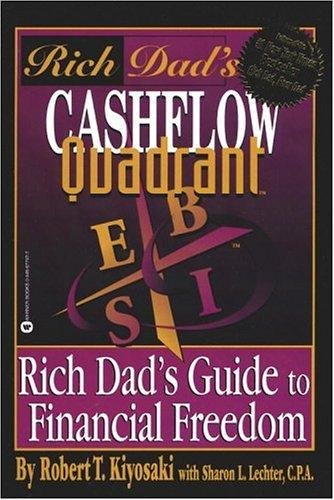
An easier read on this topic is Cashflow Quadrant, by Robert Kiyosaki, who wrote Rich Dad Poor Dad.
I find he explains these concepts in a really simple way, particularly the differences between being an employee, self-employed, a business owner, and an investor.
It's quite a useful way of understanding the different mindsets involved in earning money.
I would actually recommend reading these two books as a pair.
Cashflow Quadrant is easier to digest, but The E-Myth is a bit more practical, so I think they work really well together.
Profit First by Mike Michalowicz
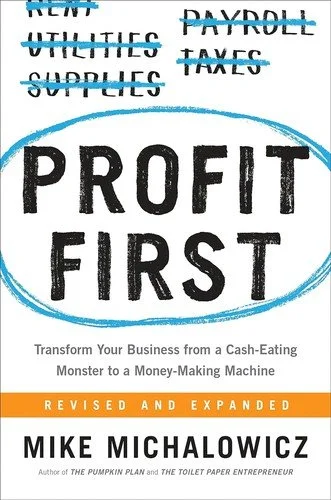
Another book I really like for business is Profit First.
It's essentially about how to structure the finances of your business so that you prioritise profit, rather than just hoping there's something left over at the end.
I use this system in my own business.
As someone who came from the spiritual and wellness industries, I definitely found the idea of profit a little hard to swallow at the beginning.
Obviously, I've done a lot of work around that, and now I think it's absolutely ridiculous that I ever thought that way.
Profit is the lifeblood of the business.
It is the Eros of the business.
It means that the business has the ability to play, expand, grow, and explore.
It means you have the resources to try things, invest in things, and create things that might not have an immediate payoff.
For the owners of a business, who are taking the risks and holding the stress and constant instability of running a business, profit is also the payoff.
It's the way in which you win by doing business.
Profit means you can donate money. Profit means you can build things. Profit means you can invest in things. Profit means you can do more good in the world.
I think it's really important, particularly for people coming out of the healing and spiritual industries, to examine some of the ideas we have about money and profit and whether they're actually serving us.
A business that isn't profitable is going to have a very hard time continuing to do good work in the world.
So Profit First is really good, and I'd highly recommend it.
Patrick Lencioni's Books
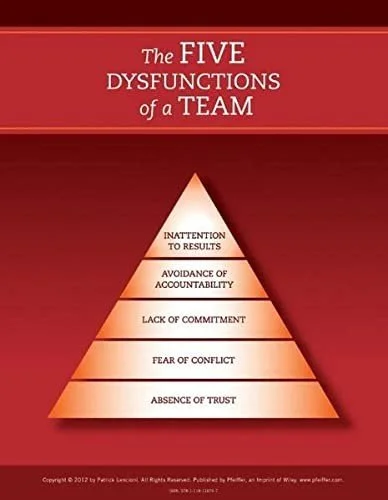
I've also read pretty much all of Patrick Lencioni's books.
He writes a lot about leadership, teams, organisational health, and the ways businesses function.
Some of his books include The Five Dysfunctions of a Team, The Advantage, and Death by Meeting.
While they're probably not particularly relevant to a lot of individual, sole-trader-style businesses, I do think some of the ideas in there are helpful.
Again, I think it just helps you think about business in a certain way.
If you're planning to grow a team, or you're already managing people, I'd definitely recommend having a look at his work.
The Hard Thing About Hard Things by Ben Horowitz
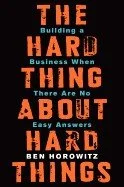
Again, this is probably not particularly relevant if you're running a small practice or working for yourself, but I really enjoyed The Hard Thing About Hard Things.
I literally felt like, while we were operating at a very different scale, I could relate to so much of what Ben wrote in that book.
I was at the helm of SuperFeast as it went from around $300,000 to over $6 million in revenue, and that was insane.
It came with a lot of sacrifice and chaos and confusion.
There were so many times when I had absolutely no idea what I was doing, and we were just having to work things out as we went.
I think that's one of the things people don't necessarily understand about running a business. You can be doing really well, and it can still feel completely chaotic.
You can be growing, making money, hiring people, and building something that looks successful from the outside, while internally you're trying to solve a hundred problems you've never encountered before.
On a kind of archetypal level, I really resonated with what Ben wrote about the experience of being responsible for a business and having to keep making decisions when things are difficult.
I found it really helpful to read someone else's experience of that.
The Practice by Seth Godin
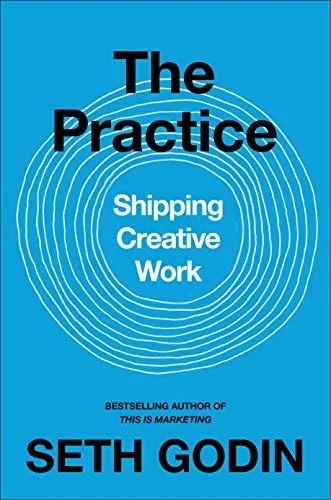
I love everything Seth Godin has written.
I would say he's probably been the biggest influence on how I think about marketing.
If I had to recommend one of his books to everybody, though, I think The Practice is probably the most useful.
It's really about creative work and the discipline of showing up and doing it.
Not waiting until you're inspired, or until everything is perfect, or until you're sure that what you're making is going to be well received.
Just doing the work, putting it out into the world, and continuing to practice.
I think this is particularly relevant for people who are building businesses around their own skills, creativity, knowledge, and experience.
There's a lot of vulnerability involved in putting something you've created into the world, particularly when it's something you really care about.
I think Seth has a really helpful way of approaching that.
This Is Marketing by Seth Godin
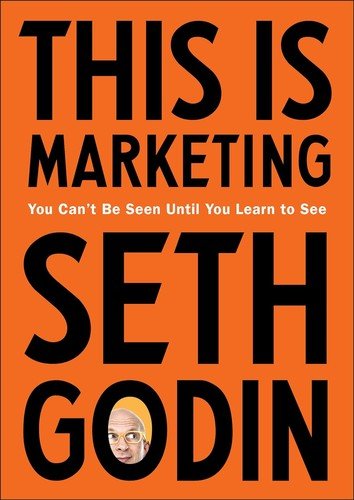
I'd also recommend This Is Marketing, and honestly, I'd encourage you to have a look through his other books as well.
Seth has really influenced how I think about marketing, particularly the idea that marketing is about being of service to people.
It's not about convincing everyone to buy your thing.
It's about understanding who your thing is for, why it matters to them, and how to communicate that.
I think this is such an important reframe for people who are uncomfortable with selling, particularly if you're coming from a background where your work is very personal or service-oriented.
Marketing doesn't have to be this horrible thing you do to people.
It can actually be part of how you serve them.
That's something I come back to again and again in my own business.
The Art of Asking by Amanda Palmer
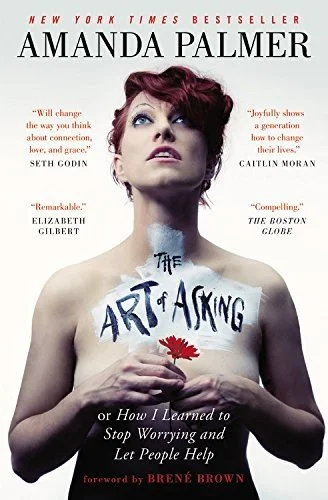
Another book that really influenced how I think about marketing, perhaps a little tangentially, is The Art of Asking by Amanda Palmer.
I'm not particularly a fan of her music, but I found her book really interesting.
Amanda Palmer was one of the early musicians to raise over a million dollars on Kickstarter, and her book explores the relationship between artists and their audiences, particularly around asking people to support your work.
Her premise is essentially, how are you going to get it if you don't ask for it?
Which sounds really simple, but I think there's a lot in that.
Particularly for people who create things, teach things, or work in industries where asking for money can feel uncomfortable.
One of the things I took from her work is that you don't actually need a whole heap of fans.
You just need enough devoted ones to fund your work.
And that brings me to another idea that's had a big influence on how I think about business.
1,000 True Fans by Kevin Kelly
This isn't actually a book, but I wanted to include it here because I think it's worth reading.
Kevin Kelly wrote an essay years ago called 1,000 True Fans, which essentially proposed that you don't need an enormous audience to make a living as a creator.
You just need a thousand people who really love what you do and are willing to support it.
Obviously, the exact numbers depend on what you're selling and what kind of business you're running, but I think the concept is really interesting.
Seth Godin introduced me to this idea, and it's something that comes up in Amanda Palmer's work as well.
I think a lot of people get caught up in the idea that they need to have enormous audiences or become really well known to be successful in business.
You really don't.
You need enough people who genuinely value what you're offering.
And I think there's something really liberating about that, particularly for people who don't want to spend their entire lives trying to become famous on the internet.
Trent Reznor and the Future of Marketing
This is another one that's not actually a book, but I wanted to include it because it had quite a big influence on me.
I've followed Trent Reznor's career for years, and I remember watching how he took Nine Inch Nails away from the mainstream music industry and started taking the relationship with his audience into his own hands.
He experimented with different ways of releasing music, pricing it, and creating experiences for fans, rather than relying entirely on the traditional record label model.
Mike Masnick wrote a great breakdown of what he was doing at the time, and it’s the article that first got me thinking about all of this: Trent Reznor and the Formula for Future Music Business Models. You can also watch him present it here.
I found that really interesting, particularly the idea that you could have a direct relationship with the people who were supporting your work.
I think that has influenced how I think about marketing more than I probably realised at the time.
And actually, I think it's going to become increasingly relevant.
I think the future of marketing is going to be individuals weaving relationships with audiences.
It's almost like an evolution of influencer marketing.
If influencer marketing was largely based on aesthetics and visibility, I think the next wave is going to be based on trust and customer service.
On actually being in relationship and reciprocity with your customers.
Understanding that there's potentially a lifelong relationship at play.
And thinking about how you tend to that over time.
I think this is something that gets lost when we focus so much on followers, reach, conversions, and all the other metrics we use to measure marketing.
Those things are important, obviously. I'm certainly not suggesting we ignore them.
But I think the more interesting question is what happens after someone discovers you.
What kind of relationship are you building with them?
How are you continuing to serve them?
How do you create something that people want to keep coming back to, not just because you've got good marketing, but because they genuinely trust you and value what you're doing?
I think we're going to see a lot more of this, particularly as AI makes it easier and easier for people to create content.
The content itself isn't necessarily going to be the thing that sets people apart.
I suspect it's going to be the relationships they build around it.
And I find that really exciting.
More to Come
So those are some of my favourite books and resources on business as it stands.
I'll be adding to this as I go, because there are plenty more that have influenced me, and I'm sure I'll think of a whole heap as soon as I publish this.
I think reading widely is really valuable when you're running a business, even when the books aren't necessarily written for the kind of business you're running.
Sometimes it's just about exposing yourself to different ideas and different ways of thinking.
You don't have to agree with everything or implement every strategy. Sometimes one idea from a book can change the way you approach something entirely.
I'll probably just do a part two, so keep an eye out.
See you soon,
xx Tahnee
